iPhone 16 Pro vs Pixel 9 Pro Camera: Which One Actually Wins for How You Shoot
The Pixel loses portraits. Neither phone is good at the zoom you use most. And the biggest gap between them is a camera nobody talks about — with the engineering reason behind each verdict.
Three things are true about these two cameras that almost nobody says out loud.
The Pixel loses portraits. Neither phone is good at the zoom level you use most. And the single biggest difference between them is a camera you probably ignore.
I work on embedded camera systems, so for each verdict below there is a short note on why — the physics or the architecture that produces the result. The scores are evidence. The engineering is the explanation.
iPhone 16 ProPixel 9 Pro XL
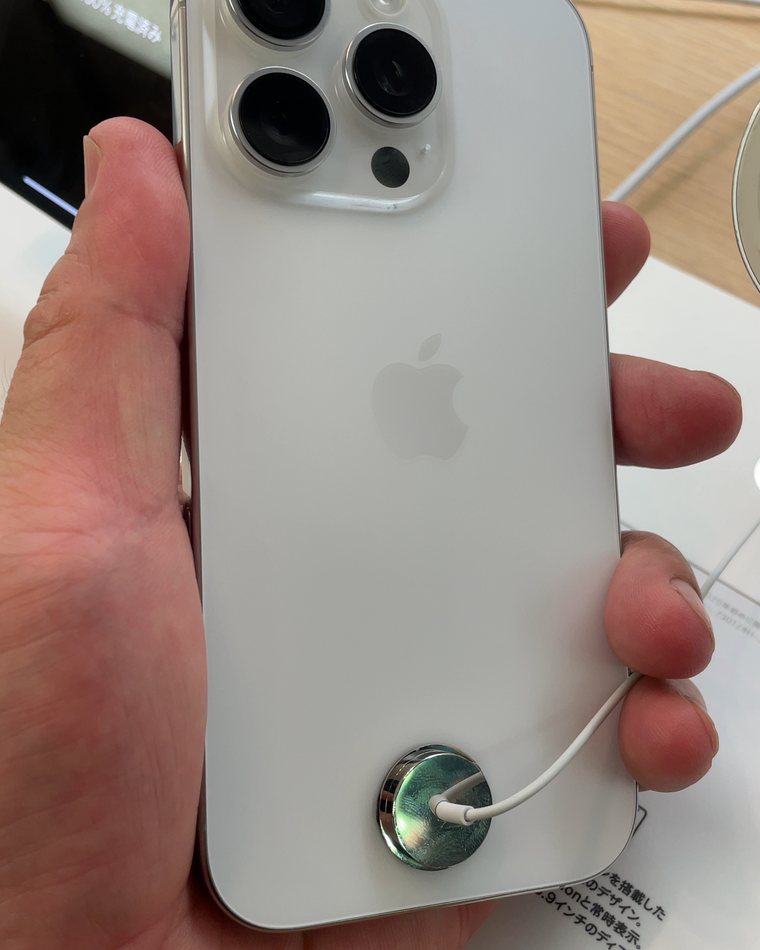
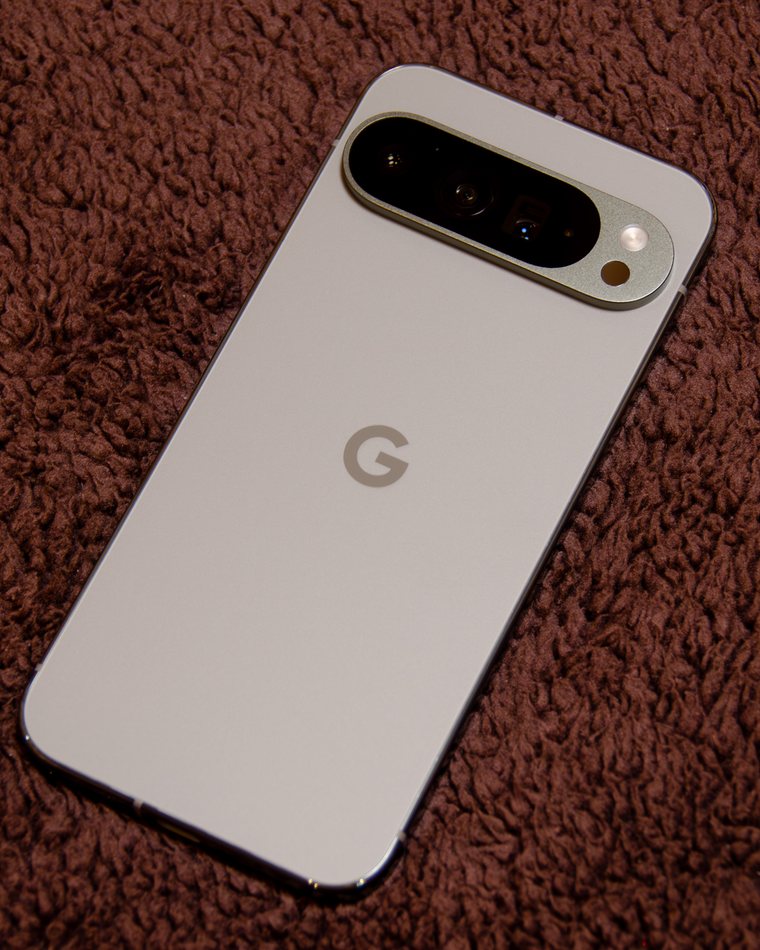
Apple stacks three lenses into a square island in the corner; Google lays them in a row across a raised bar. Same three focal lengths, two different ideas about where a camera should live. The Pixel pictured is the 9 Pro XL, which carries the identical camera system to the 9 Pro. Photos by Kyu3a and D.328 via Wikimedia Commons, CC BY-SA 4.0, cropped.Each row plots both phones on the same axis; the bar between them is the gap, coloured for whoever wins it. Sorted longest gap first. The row that matters most is the last one: the main cameras are effectively tied at 168 and 170 — so every real difference between these phones lives in the supporting cameras and in video, not in the camera you shoot with most.
The Hardware
One camera per level, each read left to right: sensor size, then aperture, then the numbers. Level 1 — near-identical on both counts, which is the tie. Level 2 — the same sensor, so the whole gap is that visibly larger aperture circle. Level 3 — the same aperture, so the whole gap is that visibly larger sensor. Every shape is drawn to true scale.
Carry one number into the rest of this article: the ultra-wide and telephoto sensors are roughly a quarter the area of the main sensor on both phones. Sensor area — not megapixel count — sets how many photons each pixel can collect before any processing runs, which is why the supporting cameras are where both phones show strain first, and why the widest gaps in the scores show up there rather than on the camera you use most.
That principle is the single most useful thing to know when reading any camera spec sheet, and I have unpacked it properly in Sensor Size Explained — including why full frame is 88× the area of a typical phone sensor, and why doubling pixel pitch buys you roughly two stops of signal-to-noise.
Ultra-Wide: The Gap Nobody Mentions
Pixel, by twenty points — the widest margin anywhere here. It scores 157 against the iPhone’s 137, and “lack of detail in ultra-wide photos” sits in DXOMARK’s list of iPhone weaknesses.
If you shoot landscapes, interiors or architecture, this matters more than anything else in this comparison — and it is the category every spec chart leaves out.
Both ultra-wides use the same size sensor, so at a fixed shutter speed the only variable is the lens. The Pixel gathers 1.67× the light; the iPhone has to make that up with gain. That is the whole twenty-point gap, expressed as the number you would actually see in the EXIF.
Portraits: Not What You Expect
iPhone, on exactly the thing people assume the Pixel owns. Bokeh scores 160 against 155, and DXOMARK’s comparison crops label the Pixel with “slight segmentation inaccuracies on hair and shirt” against an accurately segmented iPhone. Skin tones go the same way.
Two things cut back the other way. The iPhone’s shallower rendering can soften someone standing behind the rest of a group. And the Pixel still owns repair: Best Take rebuilds a group shot where someone blinked, Photo Unblur rescues a soft frame, and Apple answers neither. Object removal is no longer a Pixel exclusive though — Clean Up ships on the iPhone 16 Pro and does what Magic Eraser does.
Both phones run a learned segmentation model; the difference is what it has to work with. The iPhone can consult a depth reading that exists whether or not the edge is visible in the image, while the Pixel must find the boundary in the pixels themselves. Note the last line — Apple does not publish how the two signals are combined, so this explains the measured gap rather than proving its cause.
Video: The Clearest Win
iPhone, 167 to 155. ProRes in Apple Log up to 4K120, processed on the device in real time. The Pixel’s Video Boost produces excellent 4K and even 8K — but by uploading to Google’s servers, and until it finishes, minutes to hours later, the only usable file is a non-boosted 1080p.
One catch on the iPhone: 4K120 ProRes requires an external USB-C SSD rated 440 MB/s or faster, and the 128 GB model caps internal ProRes at 1080p30. Budget for the drive.
The format list is not what decides this. The iPhone’s pipeline finishes as you shoot; the Pixel’s best output does not exist until Google’s servers have had it. Video Boost also requires the footage to be backed up to Google Photos, so it is a connectivity dependency as well as a time one.
Zoom: Both Phones Are Weak Where You Shoot
Start with what most reviews get wrong: neither phone has a 2× lens. Both take 2× from the main sensor. Apple’s spec sheet says so — “also enables 12MP 2x Telephoto: 48 mm, ƒ/1.78 aperture,” the same lens as the main camera. Crop a 48MP sensor to 2× and you are left with exactly 12MP — which is exactly what Apple ships.
The Pixel also works from the main sensor, but reconstructs rather than crops: Super Res Zoom fires a burst and uses the tremor in your hand to sample the scene at slightly different sub-pixel offsets, then aligns and merges the stack into an image holding more real detail than any single frame did. That is not marketing language — Google published the algorithm at SIGGRAPH, and it works precisely because your hands are not steady.
Past 5×, the Pixel wins, 145 to 133.
Keep it in proportion: telephoto is the weakest photo category on both phones.
Zoom levels on a log axis, with the camera actually feeding each range. Both phones have only two optical anchors — 1× and 5×. Between them the iPhone simply crops deeper into the main sensor (its telephoto does not engage until 5×), while the Pixel reconstructs with Super Res Zoom. That red band is where the article’s “both phones are weak” verdict comes from, and it is the range you probably use most.
Low Light, Consistency and RAW
Winner
The engineering reason
Night, static scenes
Pixel
Noise here is photon shot noise, and signal-to-noise rises only with the square root of light collected — doubling it takes 4× the light. With aperture and sensor fixed, the only levers are exposure time and frame count. Google spends both harder.
Night, moving subjects
Unresolved
The bill for those long exposures is paid in motion. That is a design-point choice, not a capability gap — so without a controlled test, I won’t call it.
Shot-to-shot consistency
iPhone
More adaptive decisions per frame means more variance between near-identical frames. Running semantic segmentation into local tone mapping gives a pipeline many degrees of freedom, so a small input change flips a decision. “Dynamic range instabilities across consecutive shots” is the signature of an aggressive per-frame optimiser; Apple trades peak quality for repeatability.
RAW and editing
iPhone
Computational processing is normally destructive — crushed highlights do not come back. ProRAW is more processed than a plain DNG, not less, but a Profile Gain Table Map tag records the tone-mapping gain applied per region, so your editor can dial that layer back or switch it off. Not everything is reversible — the multi-frame merge and noise reduction are baked in — but the tone curve, the part that usually costs you the most latitude, is.
Bars are the quality gain from stacking frames; the dashed line is what it costs you in exposure time, and therefore in motion blur. Because signal-to-noise only climbs with the square root of light collected, getting twice the quality means four times the frames — while the blur risk climbs the whole way. Google pushes further along this curve than Apple does. That is the entire low-light story, and the reason the moving-subject question has no clean winner.
Pick By What You Shoot
Overall scores are tied at 161 and 160, so there is no “better phone” here — only a better fit. Pick the column you live in.
Read the hardware table again and most of this falls out of it. Same ultra-wide sensor size, different aperture. Same telephoto aperture, four times the pixels. The scores confirm the verdicts; the spec sheet largely predicts them.
These two phones built the same pipeline around different answers to one question: whose taste should the camera default to — yours, or the algorithm’s?
Scores are DXOMARK’s, for the Pixel 9 Pro XL and iPhone 16 Pro Max — the larger variants, which carry identical cameras to the models here. These are their measurements, not mine, and DXOMARK revises them as its protocol changes, so 2024 coverage will quote different numbers.
Super Res Zoom is described from Google’s own SIGGRAPH 2019 paper, Handheld Multi-Frame Super-Resolution (Wronski et al.), which sets out the burst-and-merge algorithm in full. It documents the implementation that shipped on the Pixel 3; Google has not published the details of later revisions, so read it as the method rather than the current code.
The remaining engineering notes are my own analysis, derived from published hardware specifications and first principles. Where a claim rests on inference rather than documentation — notably how Apple weights LiDAR against image-derived depth in portrait mode — I have said so at that point in the text rather than leaving it implied.